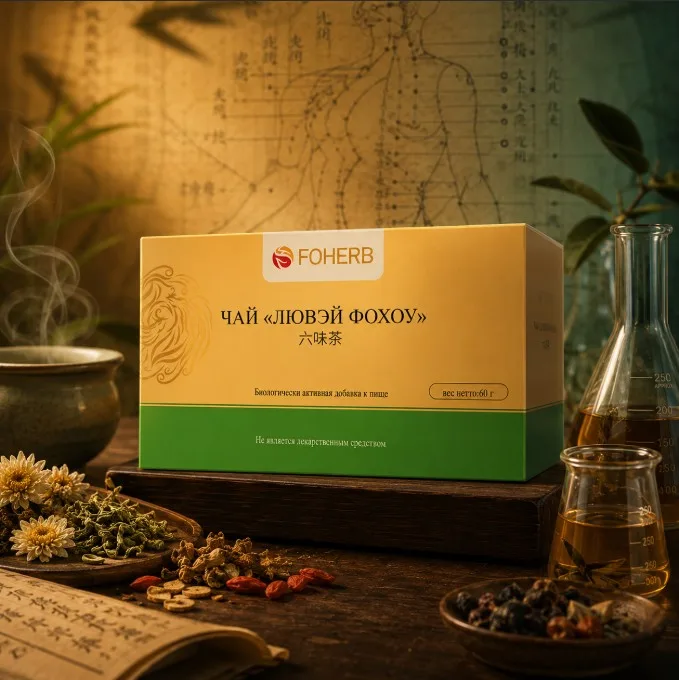
Liuwei tea
Fohow Liuwei herbal tea — "six flavours": aged pu-erh, astragalus, sage, jiaogulan, chrysanthemum and honeysuckle. One tea bag can be steeped 3–4 times.
Six herbs in one tea bag
Liuwei tea (六味, "six flavours") is made to an old Chinese recipe handed down from generation to generation. It's more than just a herbal blend: its base is aged pu-erh, complemented by five plants that have long been drunk in the TCM tradition to support well-being. The taste is pleasant and mild, so the tea easily becomes an everyday habit.
Six ingredients
- Three-year-aged pu-erh — an aged Chinese tea with a deep flavour. Traditionally drunk after meals for a light feeling in the stomach.
- Astragalus — one of the key roots of TCM; traditionally used to tonify qi.
- Sage — used in Chinese tradition to support the free flow of blood.
- Jiaogulan (Gynostemma pentaphyllum, "five-leaf ginseng") — a herbaceous vine known in China as the "herb of longevity".
- Chrysanthemum — in TCM it "cools" and brings a feeling of freshness; popular with people whose eyes get tired.
- Japanese honeysuckle (Lonicera japonica) — a classic ingredient of summer "cooling" teas.
Why it's good throughout the day
- A pleasant taste that can replace your usual tea
- A light feeling after meals
- Gentle vitality without a sharp spike
- A small ritual that's easy to fit into your day — at home, at the office, on the road
Packaging and storage
- 30 tea bags of 2 g per pack, 60 g in total
- Shelf life: 36 months
Contraindications
Individual intolerance to any of the ingredients. If you are pregnant, breastfeeding or taking medication, consult a doctor before use.
Food supplement. Not a medicine and not a substitute for a varied diet. Consult a specialist before use.
Composition
Three-year-aged pu-erh, astragalus, sage, jiaogulan (Gynostemma pentaphyllum), chrysanthemum, Japanese honeysuckle.
How to use
Prepare the water
Heat the water to 85–90 °C — it doesn't need to be boiling.
Keep the first infusions short
Dip the tea bag in hot water for just a few seconds, until the water takes on colour.
Steep it again
One tea bag can be steeped 3–4 times — each time you can leave it in a little longer.
Drink it with meals
The recommended routine is 2–3 times a day with meals. It's best to drink the last cup before 6 pm.
Frequently asked questions
This is the manufacturer's recommendation: in the first infusions the tea releases its colour and flavour very quickly. A short steep keeps the taste mild and lets you use the bag 3–4 times.
The tea is based on pu-erh, which is invigorating. That's why it's recommended to drink the last cup before 6 pm.
Yes, pu-erh is a tea, so it contains caffeine. Bear this in mind if you're limiting caffeine.
The pack contains 30 tea bags, each steeped 3–4 times. At 2–3 cups a day, one pack lasts about a month or longer.
No. Liuwei tea is a food supplement. It does not replace medical treatment or a varied diet.
Want to earn from products that sell themselves?
Learn about the business →WHIEDA products are not medicines. They are not intended for diagnosing, treating or preventing disease. Consult a specialist before use.